Background
A traditional celebration of the Ibanikom ethos: food, child and prosperity. Photo from: Ndoh Njong Titangti-Kom, the traditional female Senators and parliamentarians of the Kom Kingdom.
“There is an adage that if we do not care for our environment, our environment will not care for us. For years, we have heard a lot about climate change, but like in all crises, we always think 'they' refer to different people until it hits us like a tornado.” (Tosam, 2014)
The Kom Ethos
The Kom Ethos incorporates the symbols of ‘Iwu Kom Tual’ (Three Kom Hands), namely:
‘Wain’ (Child)
‘Afo-ayina’ (Food)
‘Nyam-gvin’ (Prosperity)
The ‘Three Kom Hands' also form the subject matter of invocatory and supplicatory prayers at all initiation rites, be it at the individual, family or village levels. They pray for the health of the mind, the body and the soul.
Climate change and the mental health plight of the Kom community that necessitated the launch of Ibanikom
Nature and the environment have traditionally served as the capital and resource for the survival of the Kom people. Yet climate change has resulted in a range of negative environmental impacts in the region. An observational study indicated that over the span of four decades, many traditional and local tree varieties diminished with many near extinction. For instance, Tephrosia, a traditional fast-growing tree that was a source of livelihood for energy, sinking carbon and increasing soil nutrient, barely grows in Kom at present. Community members have also noticed rising temperatures in a village that used to be cold and green. There have been unprecedented landslides due to unprecedented rainfalls. This has affected farmlands for a population that is 95% agrarian. Many traditional food delicacies like edible mushrooms, varieties of seeds and pulses, as well as medicinal plant varieties, are becoming scarce and endangered. These impacts have affected people’s livelihoods, increased communicable and non-communicable diseases and steeply increased deaths in the region.
Using responses from Whatsapp groups, questionnaires and feedback from focus group discussions with community members, we found that these impacts have resulted in individual and community depression, distress and anxiety.
To address these needs, Prof Kenneth Yongabi Anchang, a Professor of Public Health and founder of the PRF foundation and Rev Fr Joseph Ateh, a moral theologian and Director of the Centre for Inculturation, Nairobi, Kenya, founded the Ibanikom Climate Mental Health Literacy Evolution Project (Ibanikom) and coordinates its work.
Ibanikom is a co-creation and co-development model built on the Kom Ethos of the Indigenous Kom community in Cameroon. Its objectives are to integrate traditional knowledge and science in the understanding and responses to caring for the needs of the community, including mental health and wellbeing of the Kom people as well as the care and protection of their land.
Traditional ecological bamboo house in Kom
Project philosophy and objectives
Our objective is to change the status quo by raising climate and mental health awareness through a health literacy approach built on the intersection of local wisdom and modern science.
We aim to achieve this objective by creating traditional hubs for climate change mitigation and mental health support interventions to help Kom members develop skills to cope with the stresses and threats of their environmental work.
Development of Ibanikom
Led by Professor Yongabi, project hubs and interventions were developed by a multidisciplinary team, including mental health professionals, government representatives, religious organisations, the Phytobiotechnology Research Foundation Cameroon and other traditional stakeholders involving the King, Traditional Council and village Elders.
We conducted an initial year-long assessment through discussions groups, key informant groups and consultations with the traditional stakeholders of the Kom clan.
This process generated data on the extent of climate devastations on the physical, social and mental health status of the Kom people.
Our findings showed that the Kom people experience sadness, anxiety and depression due to climate hazards. We catalogued these expressions in the Kom Dialect. We also observed the environmentally-induced stressors and triggers of mental health that affect wellbeing and noted that there was a poor understanding of the effects of climate devastation on mental health. Rather, mental health effects were attributed to cultural taboos and rituals. The meaning of personal growth and happiness were a function of their relationship with the gods’ ancestral connection rather than the science of climate change.
We combined traditional and ancestral tools and resources to generate a needs assessment and impact assessment with modern science methods to analyse our findings and develop our health literacy interventions.
The Ibanikom Intervention
Interventions are written in English and Kom language. We undertook several iterations of both interventions after a rigorous process of expert consultations with mental health professionals.
Interventions were created to cater to the mental health needs of specific groups (children, women and men). Psychosocial support services (counselling sessions and mental health literacy programmes), as well as tree planting and organic farming initiatives, aim to: address negative mental health symptoms (e.g., depression, anxiety, stress, self-doubt); improve knowledge of the causes of the mental health crisis and the environmental changes; and explore local taboos, rituals, etc. These interventions also aim to bring the positive benefits (sense of meaning, personal growth, happiness) of environmental literacy to the work community members.
We undertook a pilot of the intervention with select leaders from the traditional governing council and among some elderly people from the community.
What has been achieved so far with Ibanikom?
- We have built a mental health literacy and a climate literacy community of practice based on traditional structures and knowledge, which has involved trained 250 people in the Kom community over the last three years.The programme aims to increase mental health literacy through a limno-psychosocial support model rooted in modern mental health therapeutic and prevention approach and traditional methods. Ethno-psychologists interact with modern-day clinical psychologists to provide support to the community in the Kom dialect.We have identified traditional medicine and plants as well as ethnopsychological models in addressing mental health in Cameroon and Africa.We found that communities benefit from incorporating traditional ways of climate adaptation to improve food and water security, including:Planting of traditional trees such as tephrosia and bamboos that sink carbon and are widely used by ancestors as materials for construction of homes. We have trained more than 145 persons in the last 14 months on local tree planting and planted more than 1,000 trees.Educating people on erosion control using vetiver grass and respect of traditional forest reserves and traditional buffer zones.Building the first ecological household and community water treatment system to curb water-borne diseases due to extreme climate change. This technology uses green materials devoid of chlorine and alum and uses less energy than standard water treatment methods. This technology has been used for the past 9 years by the Balikumato village in Kom, and more than 100 people have been trained in its use.Building an ecological farming training centre in Bamenda where green plants are used to produce fertilisers. This increases resilience by enabling people to farm their backyards using green manure and integrated farming methods.The programme has been adopted by other African countries, including Nigeria and Uganda.Ibanikom has identified the socio-cultural triggers of mental health issues (e.g., depression, grief, suicidal ideation, bipolar disorder) and how climate devastations exacerbate their prevalence and affect people’s quality of life (as measured by disability-adjusted life years (DALYs)).We established a financial solidarity fund scheme where community members have shares deposited in a credit union. This intervention was designed for community members registered with the Ibanikom group to help women and children manage their negative mental health symptoms (e.g., depression, anxiety, stress, social disconnection) as well as develop skills to cultivate wellbeing (e.g., interpersonal skills, meaning-making through appreciating personal growth and fulfilment, and building positive relationships) in a group setting through financial capital. This process is an important intervention as some individuals cope better in group contexts. Group activities involve growing fruits and staple crops organically and the group jointly undertake sales. Some of the fruit trees sink carbon and prevent erosion. The scheme also purchases medicinal and healing plant products raised by the members to jointly sell and share profits.
The above interventions are holistic and powerful, as they are built on an evidence-based approach. Primary research and data gathering guided the selection of themes and intervention design. Pilot testing involved participation from prospective users of the interventions and interventions incorporated their feedback.
Map of Kom-Boyo Division of Kom, Cameroon
Programme challenges
Creating awareness and acceptance of mental health diagnoses is quite challenging within this community, as mental health stressors and triggers are often linked to superstition rather than clinical causes. Linked to this, we noticed resistance in trying to explain scientific diagnostic approaches and treatments for mental health problems such as anxiety and depression; many Kom people preferred the use of traditional medicinal plants in these cases.
We also noted that traditional counselling methods by ethno-psychologists differ slightly from those clinical psychologists; therefore there is a need to further study and harmonise these two methods. Additionally, we need funding to develop training modules written in English, traditional Kom language and other local languages in Cameroon.
Recommendations for the future
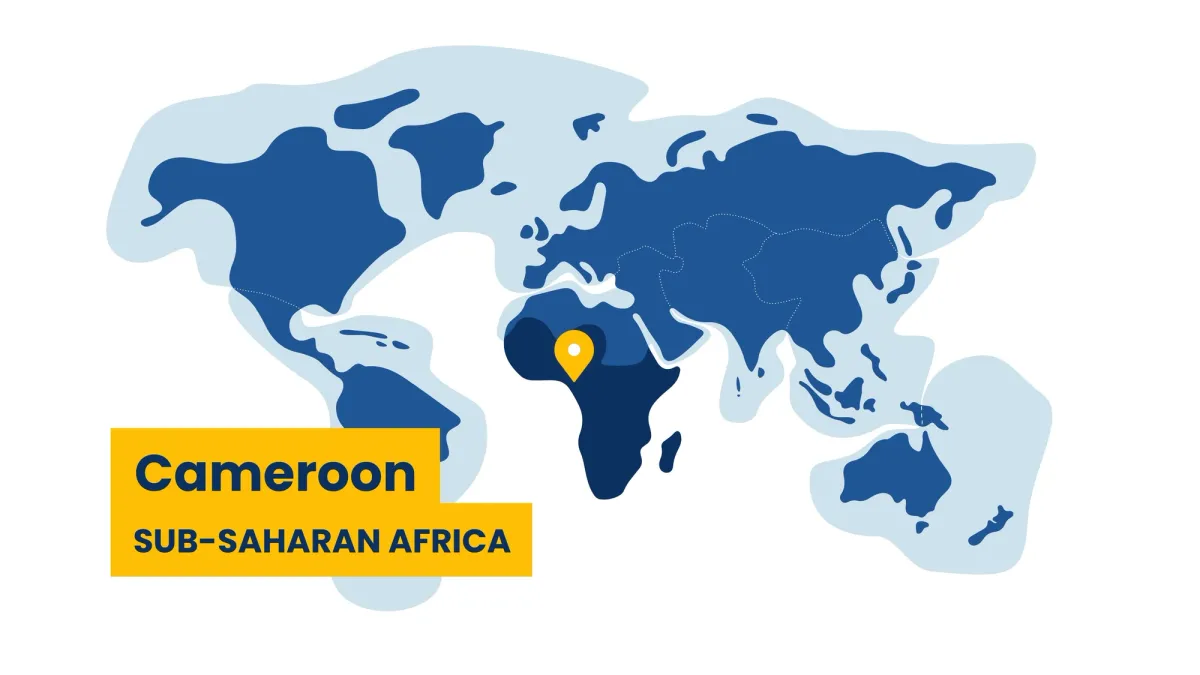
Ibanikom is the first practical climate mental health model developed and adopted by a kingdom in sub-Saharan Africa. To expand the use of this model, there is a need to translate interventions into different languages used across the region. There is also a need for capacity building across communities in Africa in light of the increasing impact of climate change on mental health.
Already, communities in West Africa have invited the Ibanikom group to train them on this model. We would like to create online and mobile app versions of our interventions – especially those that address mental health diagnosis and counselling – so that psychologists across Africa can adopt, adapt and implement our model.
References
- https://kennethyongabianchang.com/projects/Timnge, E., The Performance of the Kom Nuptial or Birth Song, https://www.afoakomusa.org/blog?blogFrost, G., 2008. Living in Sin: Cohabiting as Husband and Wife in Nineteenth-Century England. (Manchester: Manchester University Press).Goode, W. J. Changing Family Patterns: Sub-Saharan Africa. In World Revolution and Family Patterns. Edited by William J. Goode (New York: The Free Press, 1963).Robert, F. & Orest, R., (eds.,), Family and Society (London: Oxford University Press, 1976).Eboh, M. P., Philosophical Essays: Critique of Social Praxis (Port Harcourt: Paragraphs, 1996).Joseph Ateh et al., Op. Cit., p. 35https://www.youtube.com/watch?v=1W9kc9K5N-w: Discussion on Kom culture Part 2: The Child’s Pot Ritual – “Ikhin iwayn’’. 5th Aug. 2020
Contact Ibanikom Project coordinator: yongabika@yahoo.com