
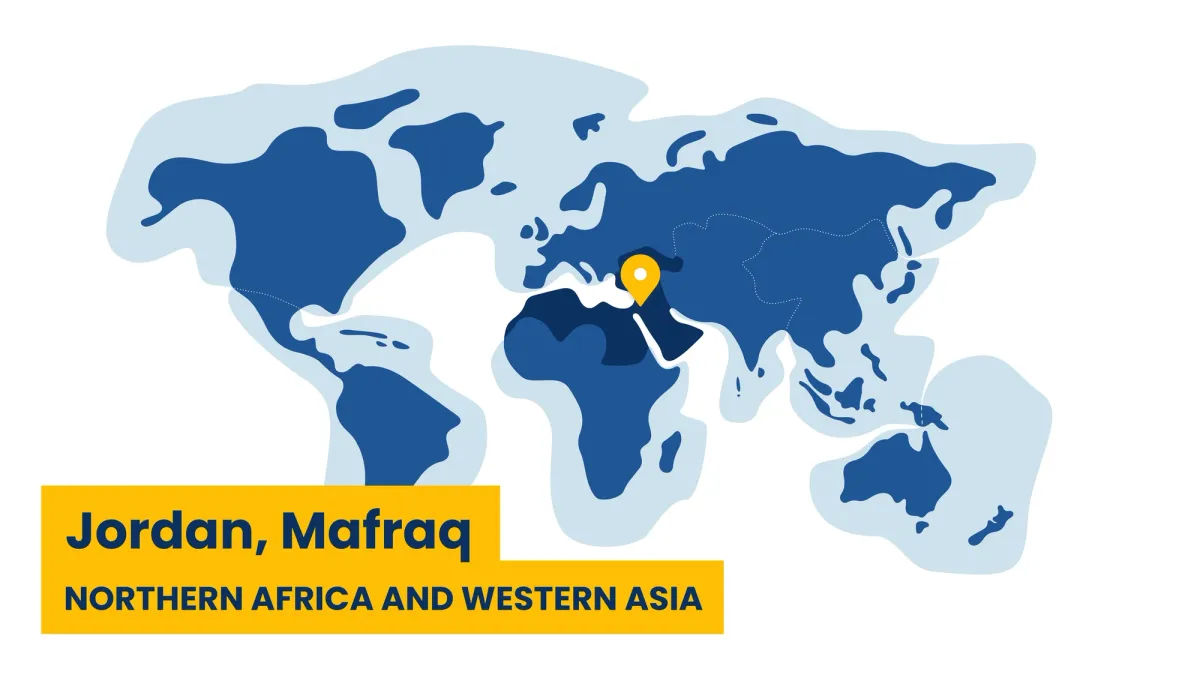
Background
One of the Jordan Health Aid Society members installed solar lighting systems in Za'atari Refugee Camp, offering a beacon of hope amidst the darkness of displacement (Photo courtesy of Jordan Health Aid Society)
The Zaatari Refugee Camp, established in July 2012 in response to the Syrian crisis, currently shelters 84,314 refugees, including a significant proportion of women, and 17% are children under the age of five. The camp spans 5.4 km² and accommodates approximately 26,000 shelters, with 20% of households being headed by females (UNHCR Zaatari Camp Factsheet June 2023).
The Zaatari Refugee Camp is besieged by a multitude of climate-related challenges that severely impact the lives of its inhabitants. Extreme weather conditions, characterized by scorching summers and frosty winters, create harsh living environments in the camp, which is often not equipped to handle such temperature extremes. Water scarcity poses a critical issue. The growing number of camp residents is putting pressure on already limited water resources, complicating access to clean water for drinking, cooking, and sanitation. This is compounded by sanitation and hygiene issues, often exacerbated during heavy rains leading to flooding and potential water contamination. The camp also struggles with frequent dust storms, which degrade air quality and pose health risks, particularly for children and the elderly. Energy shortages are a constant challenge, affecting daily life and safety, and becoming more acute during weather extremes when the need for heating or cooling surges. Furthermore, these harsh climatic conditions contribute to a variety of health risks, including respiratory problems and vector-borne diseases, and heighten psychological stress and mental health issues among the camp's population. These multifaceted challenges underscore the need for comprehensive and innovative solutions to improve the living conditions and resilience of the camp's residents (UNHCR, 2015).
In 2017, to address both the high electricity demand and safety hazards associated with the existing infrastructure, the world's largest renewable infrastructure in a refugee camp was introduced—a 12.9 megawatt (MW) solar plant. However, this solar plant's capacity was insufficient to provide 24/7 electricity, leading to daily electricity outages, particularly during the nighttime.
The frequent electricity blackouts significantly increased feelings of anxiety and distress among women and children, especially at night. A series of studies highlighted that women felt unsafe during outages with reports of increased gender-based violence such as sexual harassment occurring during blackouts. Women also faced challenges performing essential household and childcare duties without lighting and reported distress over safety concerns accessing shared latrines in dimly-lit areas (UNHCR, 2023, Thorgern A, 2021).
Children’s education and development suffered greatly due to their inability to study after sunset during power cuts. A UNICEF assessment (2014) found enrollment rates dropped substantially among Zaatari children, with girls particularly impacted due to the cold weather and lack of heating in the schools. The disruption to education led to heightened stress and idleness among children, impacting their psychosocial well-being.
Introduction of Solar Plants
In response to the electricity challenges faced by the camp's residents and recognizing the broader mental health impact of climate change, Jordanian Humanitarian Aid Society International (JHASi) initiated a project to provide solar-powered lighting systems to households in Zaatari Camp. The project successfully provided 200 solar-powered lighting systems, positively impacting more than 300 school-aged children from lighting shelters to preserving food and maintaining hygiene. Each solar-powered system was capable of generating 200W of light, stored in batteries to be used during electricity outages. This implementation was crucial in ensuring consistent and reliable lighting, especially during nighttime when the camp was most vulnerable to power cuts.
The project aimed to mitigate the mental health consequences of climate change by addressing the following aspects:
- Psychological resilience: Climate change can bring about feelings of helplessness and despair, especially in vulnerable populations. The project's provision of solar-powered lighting enabled the camp residents to regain a sense of security and control over their environment. This empowerment fostered psychological resilience, helping individuals cope better with the ongoing challenges posed by the changing climate.Reduced climate anxiety: Climate-related disasters and extreme weather events can lead to anxiety and stress. Solar-powered lighting reduces the stressors associated with poorly lit areas, making residents feel safer and more secure during climate-related emergencies and resulting power outages. This, in turn, alleviated climate-induced anxiety.Community cohesion: Climate change can disrupt communities and social structures. The improved lighting facilitated more social interaction within households and the camp community, fostering a sense of togetherness. Strengthening social bonds helped residents better cope with the social and emotional challenges brought about by the compounding burden of climate change and migration.Educational opportunities: Climate change impacts disrupt traditional learning environments. The provision of solar-powered lighting enabled students to engage in nighttime study sessions, ensuring continuity in their education. This not only boosted self-esteem but also provided hope for a future where they could actively address climate-related challenges.Health and well-being: Climate change often leads to increased health risks. Solar lighting reduces the likelihood of accidents, injuries, and health hazards in poorly lit areas, contributing to improved physical health. This, in turn, had positive implications for mental health, as individuals felt safer and healthier in their environment.
Key insights and lessons learned
This case study demonstrates the significant mental health and resilience benefits that targeted renewable energy programs can provide in refugee camps and vulnerable communities coping with climate change impacts. The solar lighting initiative directly alleviated key psychological stressors - safety fears, disrupted social bonds, education loss, and health risks. It fostered agency and empowerment to deal with electricity scarcity.
Such solar energy solutions are both replicable and scalable to other refugee populations in the MENA region facing harsh climate conditions, electricity poverty, and mental health burdens. As this program showed tangible results despite limited scope, larger implementations tailored to contextual needs can further mitigate the wider psychological toll. For instance, solar water heaters could alleviate domestic burdens.
The case informs sustainable development policy and practice on integrating evidence-based renewable technology to promote displacement-affected community resilience. It demonstrated that environmental and psychological interventions can go hand-in-hand. Renewables are not just technical fixes but have immense capacity to uplift social well-being. Regional and national policy frameworks addressing refugee living conditions, women's empowerment, child development, health infrastructure, and education should therefore incorporate solar and other clean energy initiatives as a key priority with adequate funding.
The project's impact on mental health concerning climate change was profound:
- Improved climate resilience: Solar-powered lighting empowered residents to face the challenges of climate change with greater resilience, reducing feelings of helplessness and despair.Alleviated climate anxiety: Enhanced lighting during emergencies eased climate-induced anxiety, making residents feel more secure and capable of responding to climate-related disasters.Enhanced community bonds: Increased social interaction fostered a sense of community, helping residents support one another in times of climate-related adversity.Sustained education: Access to nighttime study opportunities gave students hope for a better future, mitigating the mental health consequences of disrupted education due to climate change.Healthier environment: The project's impact on physical health translated into improved mental well-being, as residents felt safer and less vulnerable to climate-related health risks.
In conclusion, the project to provide solar-powered lighting systems in Zaatari Camp played a pivotal role in mitigating the mental health impact of climate change. By empowering residents, reducing climate anxiety, fostering community bonds, sustaining education, and promoting overall well-being, the project helped individuals and families better cope with the mental health challenges posed by a changing climate, ultimately contributing to their resilience and hope for a more sustainable future.
Recommendations
To enhance the intervention at Zaatari Camp, it's essential to focus on the sustainability and expansion of solar lighting systems, ensuring they continue to mitigate the mental health impacts of extreme weather and climate events. Regular maintenance, local involvement in technical operations, and expanding coverage to more vulnerable areas can significantly alleviate stress and anxiety induced by climate-related challenges. Prioritizing community feedback is vital, as it ensures the intervention remains attuned to the evolving mental health needs of residents while integrating the lighting with essential services can provide a more comprehensive approach to climate resilience.
For broader impact, research should concentrate on understanding the long-term mental health benefits of such interventions, providing robust data to shape climate and health policies. Advocacy efforts are needed to highlight the critical link between renewable energy solutions, climate change mitigation, and mental well-being, urging policymakers to allocate resources strategically. Developing scalable models, tailored to diverse environmental and community contexts, can extend these benefits to more regions affected by climate change. Cross-sectoral collaborations are crucial for pooling expertise, resources, and innovative solutions, enhancing the intervention's effectiveness and reach. Finally, exploring innovative funding mechanisms can secure the necessary support for these crucial initiatives, ensuring that communities vulnerable to climate change receive the mental health support they need through sustainable and resilient infrastructure.
References
Thorgren A and Ghasemi Niavarani M (2021). When darkness falls: Women’s safety in refugee camps : A systematic literature review on the role of energy solutions for women. Dissertation. Available here: https://www.diva-portal.org/smash/record.jsf?pid=diva2%3A1563858&dswid=8474
UNHCR (2015). Dunmore C. Winter storms bring more hardship to refugees in Jordan's Za'atari camp. Available here: https://www.unhcr.org/news/stories/winter-storms-bring-more-hardship-refugees-jordans-zaatari-camp
UNICEF assessment (2014). Access to Education for Syrian Refugee Children in Zaatari Camp, Jordan - Joint Education Needs Assessment Report. Available here: https://data.unhcr.org/en/documents/details/42376
UNHCR Zaatari Camp Factsheet June 2023 (2023). UNHCR Jordan – June 2023. Available here: https://data.unhcr.org/en/documents/details/102686
UNHCR (2023). Karim H. In Pakistan, solar streetlights are illuminating the way to safety and empowerment for refugee women and girls. Available here: https://www.unhcr.org/asia/news/stories/pakistan-solar-streetlights-are-illuminating-way-safety-and-empowerment-refugee-women
Written by
Jordan Health Aid Society