
Context
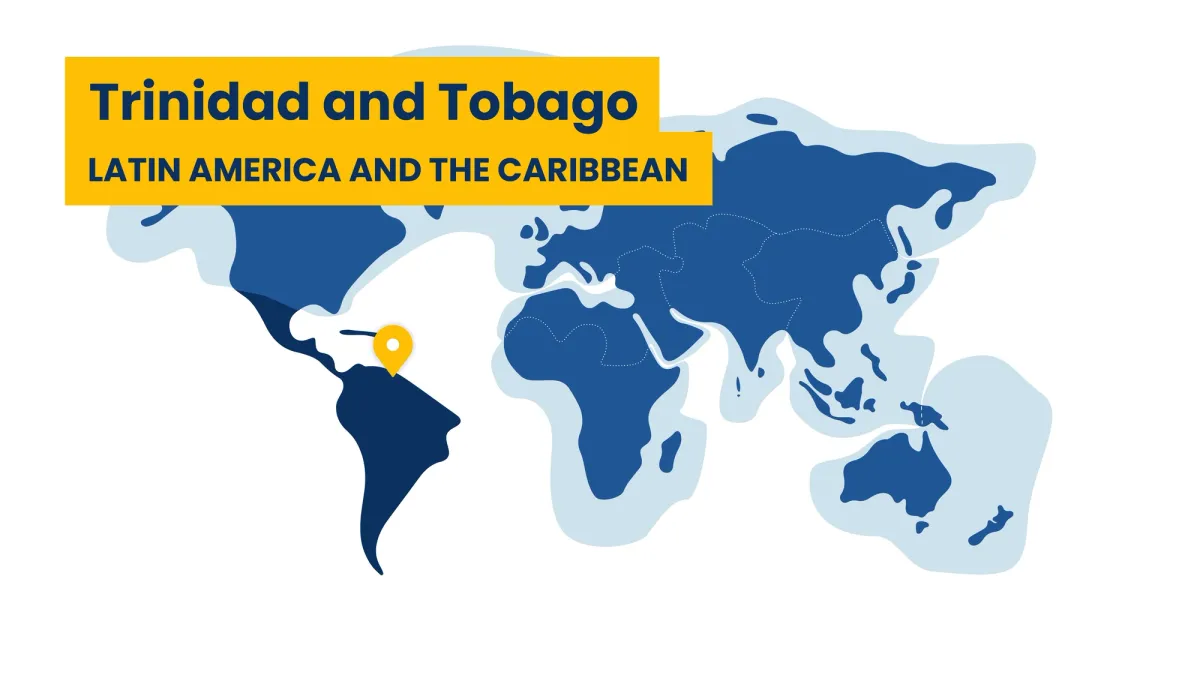
Trinidad and Tobago, a Small Island Developing State (SIDS) is vulnerable to the negative effects of climate change. Physical size, susceptibility to natural disasters, a small population (~1.4 mil), economic vulnerability, and low adaptive capacity (1,2) are all factors that contribute to the small islands’ vulnerability. The effects of climate change are impacting the cultural survival, livelihoods, and physical and mental well-being of island communities. Furthermore, the negative mental health impacts of climate change on SIDS populations are projected to worsen (1,3).
Community Description
Trinidad’s north/northeast coast is famous for its beautiful, picturesque coastal communities and beaches including Grand Rivere, Waimea, La Fillet, Blanchisseuse, Maracas and Las Cuevas. Within rural/coastal communities in Trinidad, anecdotal evidence suggests that there are very high levels of both dimensions of place attachment – ‘place identity’ and ‘place dependency’. Place identify manifests in the ‘emotions, values, memories, attitudes, and behaviour’ of persons in these small, remote communities where many family generations live/ lived and where familial ties and strong relationships extend beyond bloodlines. Furthermore, the livelihood of many families in these communities is directly linked to their ‘resource/materially driven relationship with their environment’ – ‘place dependency’. Income for many families is generated from fishing, farming, and tourism. Their ‘place dependency’ is manifested in the ‘functional bonds’ they have with their environment through recreation, occupation, or social activities (4,5).
From as early as 2011, Sargassum seaweed started appearing in unprecedented amounts, lining coastal areas of the North Atlantic and the Caribbean including Trinidad and Tobago. While Sargassum seaweed is a crucial part of the ‘marine ecosystems and provides food, habitat, nursery, and a migration route for marine organisms’, in proliferated amounts, it can result in adverse environmental and health (including mental health) outcomes (6). Annual invasions lead to high levels of place disruption in coastal communities – that is, ‘negative emotions and grief experienced when one’s community/environment’ is ‘modified, degraded or destroyed’ (5). These negative emotions and grief result from the interruption in fishing and boating activities, its profound effects on wildlife and coastal pollution as well as on recreation and tourism. Physical health can also be impacted by the invasion of the seaweed and include ‘problems breathing, drowsiness, fatigue, loss of appetite, headache, irritability, poor memory, and dizziness when exposed to hydrogen sulphide, the gas that is emitted when the seaweed decomposes on hitting the shores’ (6).
This case study documents one farmer’s mission to safeguard his community’s place attachment levels by singlehandedly cleaning communities’ beaches while utilising Sargassum seaweed in fertilisers for his crops. Meet Mr. Kolangi Ruiz!
Mr. Kolangi Ruiz (Photo courtesy of Shelly-Ann Hunte)
Climate-Related Mental Health Impacts
Reminiscing with a smile on his face, Kolangi, a farmer from the Grand Rivere community, recounted fond memories from his childhood associated with his community environment. Specifically, he recollected the time spent with his friends during their July-August vacation periods. The ‘crew’ would visit the beach daily and spend the majority of the day ‘laylaying’, boogie boarding and surfing using handcrafted equipment made from wood and barrels found in the community.
Roasted breadfruit and fish were the main entrées consumed daily, cooked by the hands of these young, amateur chefs, and salted by the ocean water. On occasion a neighbour’s fowl (chicken) will be ‘confiscated’ and added to the menu.
His emotions quickly shifted to sadness and despair as he shared how the invasion of Sargassum seaweed affected the lives of fishermen and other villagers. These emotions are mirrored by many other community members. It’s documented (7–9) that the seaweed invasion occurs during the months of July and August when most persons are on vacation and frequent the beach for recreation and social engagements; however, Kolangi recalls that from as early as May the seaweed can be seen in considerable amounts.
Sargassum seaweed on the beach (photo curtesy Shelly-Ann Hunte)
It is well established that solastalgia (distress and inability to derive solace from one’s environment caused by disruptive environmental change) is prevalent in many coastal communities affected by climate change and can lead to the development of mental health issues and conditions (6). Researchers, Christopher Phillips and Conor Murphy noted that a wounded coastal environment can lead to ‘high stress levels, feelings of marginalization, lower self-esteem, hopeless and helpless feelings, lower levels of problem solving and support seeking’ (5).
Intervention
There are many scientific and policy papers on the potential uses of the Sargassum biomass (agriculture, biofuel, clothing, construction material, lubricants). Examples include: (i) CERMES Technical Report No. 97 Special Edition: Sargassum Use Guide; (ii) Sargassum Seaweed and its use in crop and livestock production: possible agri-business opportunities; (iii) Sargassum Systems: A Comparative Analysis of Policy Responses to the New Caribbean Seaweed Crisis; and (iv) Biostimulant Properties of Seaweed Extracts in Plants: Implications towards Sustainable Crop Production. However, much of this information is not easily accessed, understood, and cannot be replicated by farmers in remote rural/coastal communities. Inspired by a story told by his father about a farmer from San Souci Village, Trinidad who used the seaweed to fertilise his crops, Mr. Ruiz was armed with a resolve to clean the beaches for his fellow villagers and find a use for the Sargassum seaweed. After watching several YouTube videos and conducting several internet searches, early one morning he and his elderly father ventured out to Waimea or “no head beach” on the north coast in Trinidad to collect the seaweed. His valiant actions were captured by a local news team, and he was featured on the national television news that day.
Planting crops (photo curtesy Shelly-Ann Hunte)
For several months, he experimented with composting the Sargassum seaweed using different amounts/concentrations of goat manure, horse manure, fertilising salts, potash, and minerals. After several failed attempts and the loss of many crops, he was finally successful. He smiled as he described how the crops flourished with the ‘right mixture’. He ventured out to encourage other farmers, and five people decided to join him. However, others were sceptical and continued to use commercial fertilisers from the local Agro Shops. Kolangi removed more than 1300 kg of the seaweed from the beach in 2021, half that amount in 2022 and is determined to continue this project annually.
Key Insights, Lesson Learned and Recommendations
In Trinidad and Tobago, there are several initiatives and programmes, geared towards mitigating the environmental impacts of the Sargassum seaweed invasion. These include, but are not limited to the UNDP’s Sargassum Innovation Challenge Trinidad and Tobago; extensive research conducted by The University of the West Indies that focused on the extraction of bioactive molecules of the dried seaweed biomass to create bio-stimulants for use by farmers; and Sargassum Products for Climate Resilience in the Caribbean. However, mental health dimensions are generally not present or very limited when framing the problem or developing interventions. It is clear from this case study that more needs to be done to measure and address the effects of the annual invasion of Sargassum seaweed on the mental health and wellbeing of affected communities.
The need for engagement with civil society, specifically members from affected communities must be emphasised, and capturing their lived experience and tacit knowledge can be considered a key first step. Establishing active partnerships that include community members, policymakers and researchers can ensure that their views, perspectives and lived experience are taken into consideration when defining consequences of the problem and brainstorming innovative solutions/interventions. This may lead to improvements in self-esteem, control or perception control (individual and community), social cohesion and neighbourhood belonging, all of which can positively affect mental health.
References
Kelman I, Ayeb-Karlsson S, Rose-Clarke K, Prost A, Ronneberg E, Wheeler N, et al. A review of mental health and wellbeing under climate change in small island developing states (SIDS). Environ Res Lett. 2021 Mar;16(3):033007.
Lewis CT. Climate Change and the Caribbean: Challenges and Vulnerabilities in Building Resilience to Tropical Cyclones. Climate. 2022 Nov;10(11):178.
Rise N, Oura C, Drewry J. Climate change and health in the Caribbean: A review highlighting research gaps and priorities. The Journal of Climate Change and Health. 2022 Oct 1;8:100126.
Wan C, Shen GQ, Choi S. Pathways of place dependence and place identity influencing recycling in the extended theory of planned behavior. Journal of Environmental Psychology. 2022 Jun;81:101795.
Phillips C, Murphy C. Solastalgia, place attachment and disruption: insights from a coastal community on the front line. Reg Environ Change. 2021 Jun;21(2):46.
Mclawrence JLC, Sealy H, Roberts D. The Impacts and Challenges of the 2015 Sargassum Seaweed Invasion in the Caribbean.
Franks JS, Johnson DR, Ko DS, Sanchez-Rubio G, Hendon JR, Lay M. Unprecedented Influx of Pelagic Sargassum along Caribbean Island Coastlines during Summer 2011. In 2012 [cited 2024 Jan 2]. p. 6–8. Available from: http://hdl.handle.net/1834/36124
Uribe-Martínez A, Berriel-Bueno D, Chávez V, Cuevas E, Almeida KL, Fontes JVH, et al. Multiscale distribution patterns of pelagic rafts of sargasso (Sargassum spp.) in the Mexican Caribbean (2014–2020). Front Mar Sci. 2022 Sep 2;9:920339.
Marsh R, Skliris N, Tompkins EL, Dash J, Dominguez Almela V, Tonon T, et al. Climate-sargassum interactions across scales in the tropical Atlantic. Cyr F, editor. PLOS Clim. 2023 Jul 19;2(7):e0000253.
Desrochers A. Sargassum Uses Guide: A resource for Caribbean researchers, entrepreneurs and policy makers.CERMS Technical Report No. 97 Special edition. Food and Agriculture Organization of the United Nations. 2020. Available here: https://www.cavehill.uwi.edu/cermes/research-projects/sargassum/docs/desrochers_et_al_2020_sargassum_uses_guide_advance.aspx
CARDI. Sargassum Seaweed and its use in crop and livestock production:possible agri-business opportunities. Policy brief CARDI. 2015;1. Available here: https://www.cardi.org/wp-content/uploads/downloads/2015/11/Sargassum-Seaweed-and-its-use-in-crop-and-livestock-production-CARDI-Policy-Brief.pdf
Ali O, Ramsubhag A, Jayaraman J. Biostimulant Properties of Seaweed Extracts in Plants: Implications towards Sustainable Crop Production. Plants. 2021; 10(3):531. https://doi.org/10.3390/plants10030531
Guardian Media Limited. Treasure from trashUWI researchers develop high-value phytostimulants from Sargassum seaweed. 2024. Available here: https://www.cnc3.co.tt/treasure-from-trashuwi-researchers-develop-high-value-phytostimulants-from-sargassum-seaweed/
CRFM. Sargassum Products for Climate Resilience in the Caribbean. 2020. Available here: https://www.crfm.net/~uwohxjxf/index.php?option=com_k2&view=item&id=667:sargassum-products-for-climate-resilience-in-the-caribbean&Itemid=175
Written by
Shelly-Ann Hunte (CCHSRD, UWI) and Kolangi Ruiz (Farmer)