

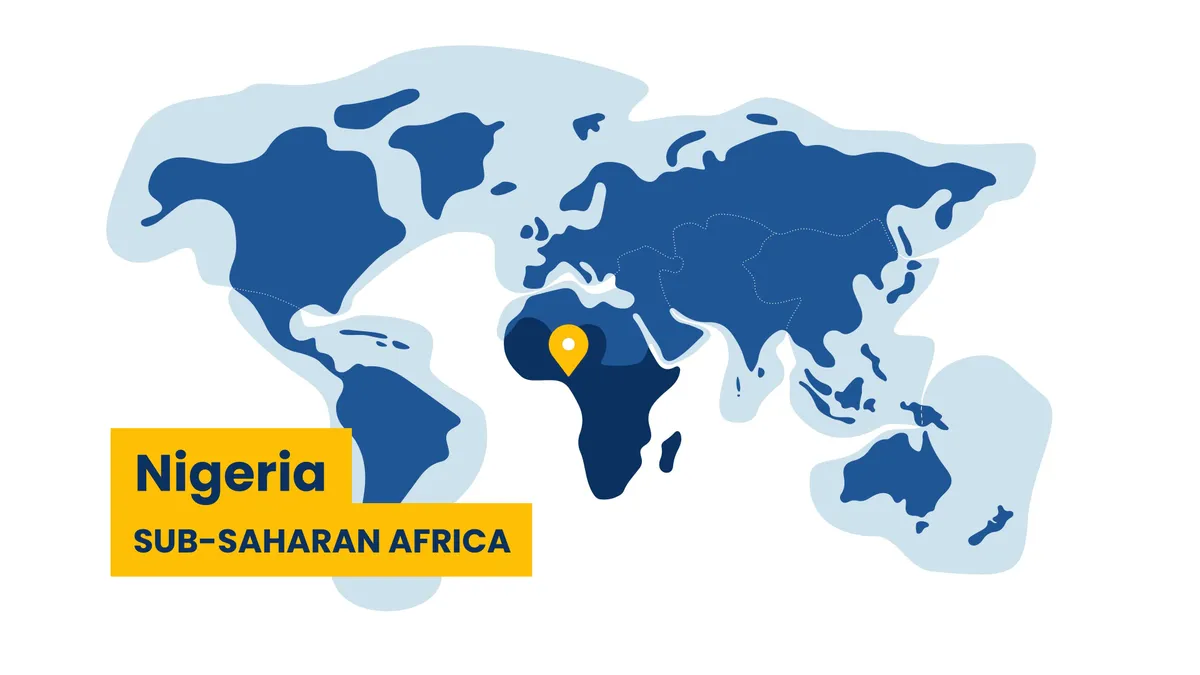
Overview
Floods in Anam Local Government Area, Anambra State, Nigeria
This case study was identified during the Connecting Climate Minds regional dialogue for sub-Saharan Africa (SSA). Dialogue participants highlighted how heavy and unprecedented flooding, brought on by climate change, has impacted the mental health of the community.
Two research assistants from the SSA Community Convenor team worked with four community members to gather the information below. The objective of this case study is to showcase an example of the effects of climate change-induced flooding on the mental health and wellbeing of people and communities.
Background
Anam Community is a mega-community of eight villages located in Anambra State and is bounded by three historic rivers: River Anambra (Ọmambala), River Niger and River Ezichi. Anam is the largest and most populous community in the Omambala region, with economic ties extending far beyond the state.
The Umueze Aname Community, one of the eight villages in the Anam Community, has experienced unprecedented, consistent flooding for the last two years. The impact on the mental health of the community is overwhelming.
Climate impacts on the Umueze Aname Community
The community first experienced extreme flooding that submerged homes and farmlands in 2020. Only a few years earlier, flooding was not common, water was fairly available and farming communities thrived.
As a result of the floods, people were internally displaced and moved to a temporary settlement in a neighbouring community school. This resulted in community members being unable to cultivate their crops, while those practising small-scale animal husbandry lost their animals to floods. Many lost their homes and properties. Drinking water became contaminated, resulting in a high prevalence of water-borne and zoonotic diseases. Many of the people who stored their seeds in barns lost them all.