

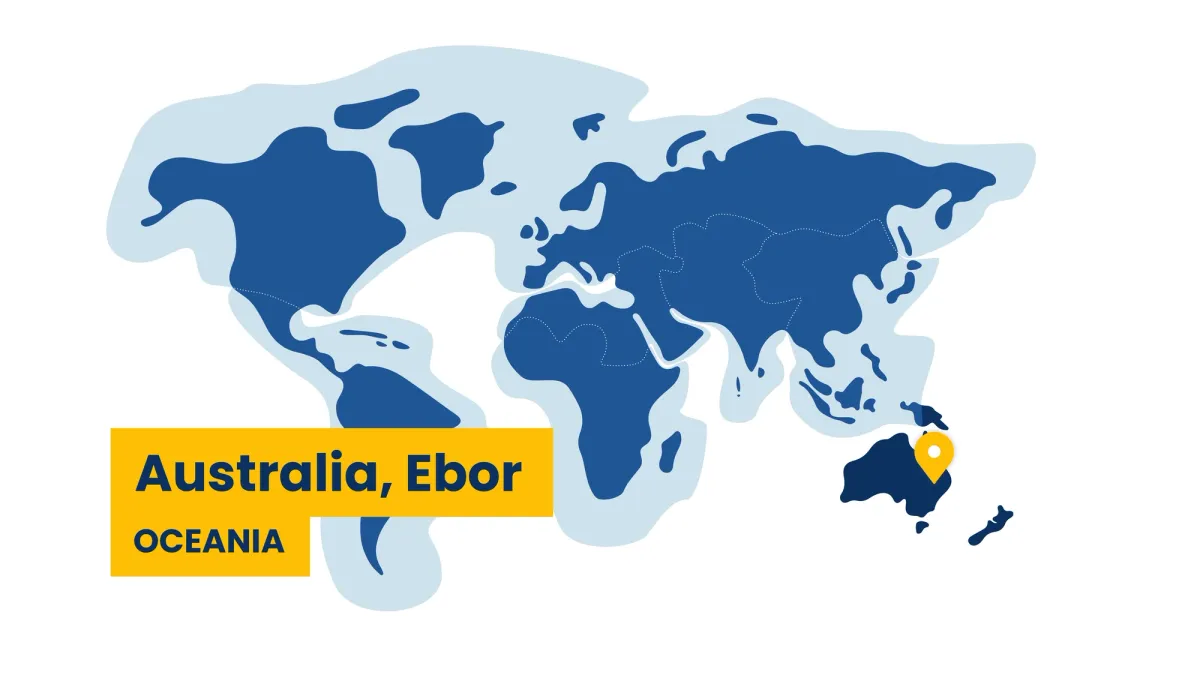
Setting
The village of Ebor (traditional lands of the Gumbaynggirr peoples) is located in the New England region of New South Wales, Australia. It is a small, rural community with a population of around 150 residents, most of whom are farmers or pensioners. Surrounded by bushlands and farmlands, Ebor sits at an elevation of 1350 meters above sea level, with an annual rainfall of 1300mm and cooler temperatures than nearby towns. Due to its location and geography, Ebor traditionally has been relatively unaffected by droughts and bushfires. However, Ebor was in drought in 2019, and was threatened by two major bushfires that year during ‘Black Summer’, including the Bees Nest fire which burned over 100,000 hectares. Many livestock died and there was also significant damage to fencing infrastructure and local national parks. Due to climate change, Ebor will continue to be at high risk of bushfires.
Figure 1: An indication of drought severity in Australia between 2017 and 2019; rainfall for April-September was far below average in each of 2017, 2018 and 2019 in most of New South Wales (as per Bureau of Meteorology, 2024)
The mental health impacts of the Black Summer bushfires in Ebor
Figure 2: Ebor Falls in 2019 after the fires went through (Photo courtesy of Kyle Donoghue)
The Phoenix Project team (a group of clinical psychologists from the University of New England, in partnership with a psychologist from the Colorado School of Public Health) conducted in-depth interviews with a diverse group of Ebor residents about 3 years after the fires occurred (at the end of 2022 and start of 2023). Those interviewed (7 males, 6 females) reflected a mix of ages from young through to older adults, and included those living in the village as well as on surrounding properties, those employed within the village and in agriculture. Interviewed participants had all been impacted by the fires either through direct loss to property, fencing and/or livestock, or were evacuated during the fires. Throughout the interviews, feelings of helplessness in the face of such extreme, unexpected fires were evident ( “…[I] got back to the house and I thought, we can’t do anything with this, it was burning green grass, so I grabbed my dog and cat and…got them into the ute and I thought, this is it, you know, I’m finished…”), as were feelings of sustained stress with multiple fires continuing to burn in the region and the ongoing threat of fires (“…it was just never ending, it was like Jesus, I wish it would f*cking rain, why can’t it just rain…”). The trauma the community experienced was similarly palpable, including significant presentations of avoidance (“…we don’t have time to recuperate, and to be able to like de-stress from that when the next one is already happening, we’re just in like survival mode the whole time…” and “…I honestly try and steer it away when it [the bushfire] does come up because like…we just really tried to move on and not think about it too much anymore or not talk about it too much…”).