

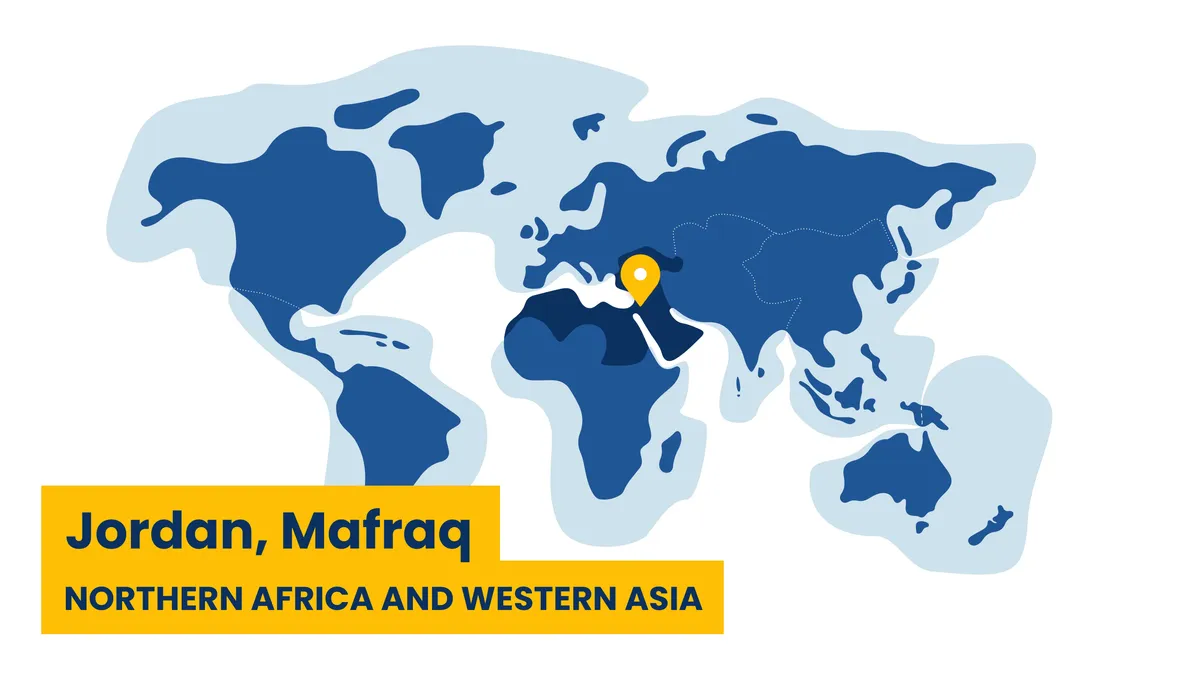
Background
One of the Jordan Health Aid Society members installed solar lighting systems in Za'atari Refugee Camp, offering a beacon of hope amidst the darkness of displacement (Photo courtesy of Jordan Health Aid Society)
The Zaatari Refugee Camp, established in July 2012 in response to the Syrian crisis, currently shelters 84,314 refugees, including a significant proportion of women, and 17% are children under the age of five. The camp spans 5.4 km² and accommodates approximately 26,000 shelters, with 20% of households being headed by females (UNHCR Zaatari Camp Factsheet June 2023).
The Zaatari Refugee Camp is besieged by a multitude of climate-related challenges that severely impact the lives of its inhabitants. Extreme weather conditions, characterized by scorching summers and frosty winters, create harsh living environments in the camp, which is often not equipped to handle such temperature extremes. Water scarcity poses a critical issue. The growing number of camp residents is putting pressure on already limited water resources, complicating access to clean water for drinking, cooking, and sanitation. This is compounded by sanitation and hygiene issues, often exacerbated during heavy rains leading to flooding and potential water contamination. The camp also struggles with frequent dust storms, which degrade air quality and pose health risks, particularly for children and the elderly. Energy shortages are a constant challenge, affecting daily life and safety, and becoming more acute during weather extremes when the need for heating or cooling surges. Furthermore, these harsh climatic conditions contribute to a variety of health risks, including respiratory problems and vector-borne diseases, and heighten psychological stress and mental health issues among the camp's population. These multifaceted challenges underscore the need for comprehensive and innovative solutions to improve the living conditions and resilience of the camp's residents (UNHCR, 2015).
In 2017, to address both the high electricity demand and safety hazards associated with the existing infrastructure, the world's largest renewable infrastructure in a refugee camp was introduced—a 12.9 megawatt (MW) solar plant. However, this solar plant's capacity was insufficient to provide 24/7 electricity, leading to daily electricity outages, particularly during the nighttime.