

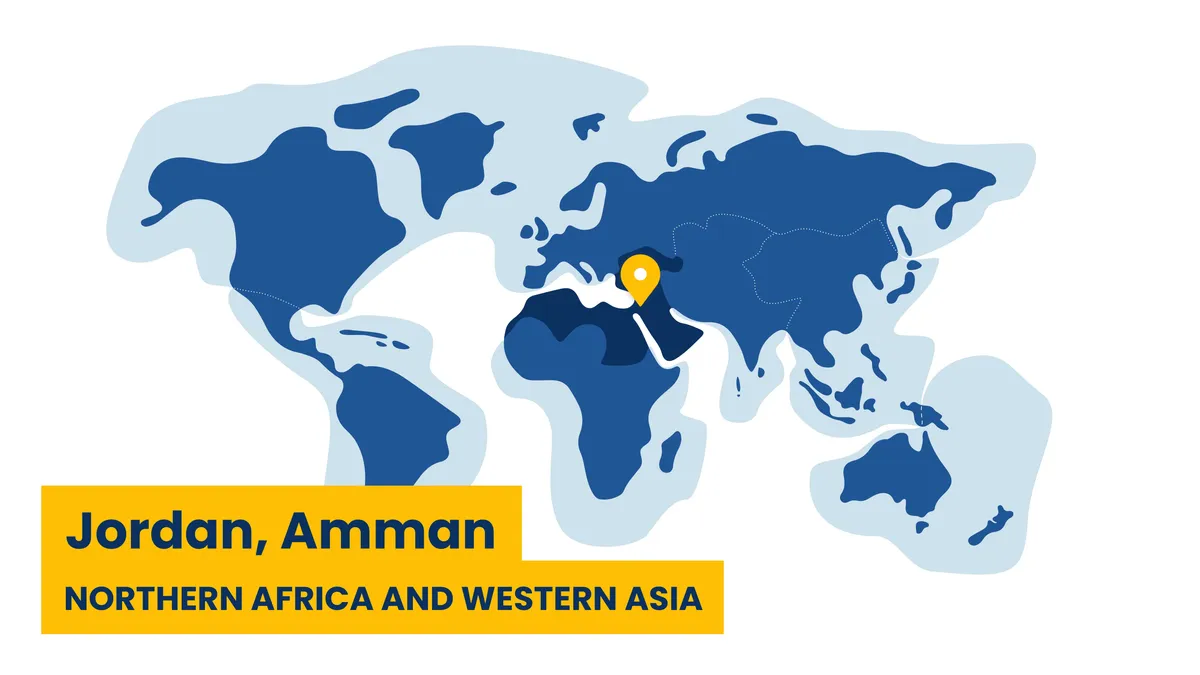
Brief Description of the Community/Country and Climate Change Experience
Dr. Yaroup Al-Ajlouni, President of the Jordan Health Aid Society, present the findings of the Connecting Climate Minds dialogue on climate change and mental health at the Ministry of Health of Jordan. (Photo courtsey of Jordan Health Aid Society)
Jordan, a country in the Middle East, is grappling with the escalating impacts of climate change characterized by arid and semi-arid climates. Jordan faces significant environmental challenges, including water scarcity, rising temperatures, frequent droughts and reduced agricultural productivity. More specifically, Jordan ranks amongst the lowest countries globally for water availability. Historically, Jordan's economy and population have been heavily influenced by regional instability and the influx of refugees, further exacerbating its environmental vulnerabilities. (WHO, 2015)
The mental health impacts of climate change in Jordan are profound and multifaceted. Reports indicate increased incidences of anxiety, depression, and stress-related disorders, particularly among vulnerable populations such as refugees. Epidemiological studies, though limited, suggest a correlation between climate stressors and mental health issues (Al-Baz H, 2021). Anecdotes from local communities describe a sense of helplessness and despair due to the loss of livelihoods and the changing environment, illustrating the deep psychological impact of these climate challenges.
Policy Description
In response to the escalating impacts of climate change on mental health, Jordan Health Aid Society International (JHASi) has led a groundbreaking policy initiative. Aligning with Sustainable Development Goals 3 and 13, this initiative is dedicated to integrating the mental health consequences of climate change into the national health planning and services of Jordan. The genesis of the policy is traced back to JHASi's proactive involvement in the Connecting Climate Minds (CCM) project and leadership of the regional community of North Africa and Western Asia. Together with the global CCM team and regional partners, JHASi developed a regional research and action agenda on climate and mental health by organising a set of dialogues and consultations with input from the mental health and climate expert communities and those with lived experience of climate change. This engagement laid the foundation for a policy that aims to address these interlinked challenges.